What we do
Research
The lab's core research areas, spanning radar imaging, target recognition, and signal processing.
Five research domains
DOMAIN 01
Radar Imaging
From coherent echoes to trustworthy representations
40 · 96 · 27
DOMAIN 02
Intelligent Target Detection & Recognition
From representations to target intelligence
11 · 33 · 11
DOMAIN 03
Electronic Warfare
Maritime missile-seeker modeling, EA/EP effects
13 · 65 · 19
DOMAIN 04
Human-Centered RF Sensing & Smart Spaces
Privacy-aware sensing of people and physiology
10 · 16 · 4
DOMAIN 05
Autonomous Radar & Multimodal Perception
Robust 3D perception for mobility and robotics
4 · 3 · 6
Numbers: journal · conference · funded projects
Radar imaging
Radar image formation and advanced signal processing
Signal to trustworthy representationHow can incomplete and distorted echoes be converted into accurate, interpretable images and signatures?
SARSynthetic Aperture Radar
ISARInverse Synthetic Aperture Radar
Raw pulse processing, range-Doppler mapping, autofocus phase error correction, and high-resolution SAR/ISAR image reconstruction
This domain turns raw radar returns into trustworthy intermediate representations: SAR/ISAR formation, motion compensation, autofocus, 3D rotational compensation and cross-range scaling, super-resolution, and polarimetric or interferometric scattering analysis.
We move beyond the monostatic limit through bistatic, multistatic and MIMO interferometric ISAR geometries and W-band synchronization across distributed platforms, recovering resolution from sparse apertures via compressive sensing and deep super-resolution.
Frequency band and platform are secondary. Work belongs here when its main contribution is synchronization, correction, reconstruction or resolution — whatever the application.
- SAR/ISAR
- Autofocus
- Motion Compensation
- Super-Resolution
- Bistatic/Multistatic
- PolSAR/InSAR
- ATI/GMTI
- Compressive Sensing
- 01-ASAR/ISAR image formation & motion compensation
- 01-BSuper-resolution, restoration & change representation
- 01-CBistatic, multistatic & distributed imaging
- 01-DPolarimetric, interferometric & moving-target processing
- 40journal papers
- 96conference papers
- 27funded projects
Selected projects
- 스마트 모니터링을 위한 차세대 멀티스태틱 레이다 영상 시스템 연구
- W-Band 기반 FMCW 바이스태틱 SAR 영상 형성을 위한 신호 동기
- 비협조 이동 표적에 대한 멀티스태틱 Passive ISAR 영상 생성 연구
- 다목적실용위성 6호 ATI/GMTI 알고리즘 개발 및 구현
- 실시간 요동보상 신호처리 SW
Selected publications
- Frame Scoring-Based Soft-Integration Approach for High-Resolution ISAR Imaging Under 3D Rotational Motion
- High-Resolution ISAR Imaging of Highly Maneuvering Targets via Frame Selection and Sparse Aperture Imaging
- Deep Learning-Based Super-Resolution of SAR Object Images via Multi-Resolution Data Augmentation
- Efficient Compressed Sensing-Based Backprojection Approach for Small Drone-Borne W-Band SAR Imaging
- MUSIC-Guided Point-Scatterer Attention for SAR Super-Resolution
Intelligent Target Detection & Recognition
Robust Radar Perception under Complex Operating Conditions
Pipeline 01 → 04How can radar perception remain reliable under complex and unseen operating conditions?
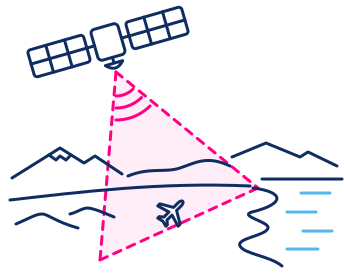
Acquiring radar imagery for remote sensing.
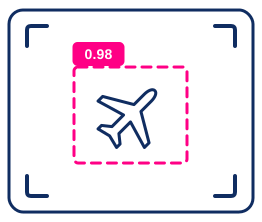
Localizing objects of interest from radar imagery.

Enhancing target features and reducing clutter.

Recognizing target classes from radar imagery.
O.-T. Jang et al., IEEE TGRS, 2026
O.-T. Jang et al., IEEE TGRS, 2026
Experimental results from IRAS Lab research. Select an image to view it at full size. Figures © IEEE.
Our research focuses on intelligent radar-based perception for detecting and recognizing targets in complex remote-sensing environments. Radar and synthetic aperture radar (SAR) provide reliable sensing capabilities over long distances and under diverse environmental conditions, making them well suited for large-scale surveillance and remote sensing. However, variations in sensing geometry, background clutter, and target appearance often make robust interpretation of radar imagery challenging.
To address these challenges, we study methods for object detection and feature enhancement that emphasize informative target signatures while suppressing irrelevant clutter. Our research explores deep learning-based representation learning, target-aware feature extraction, and clutter-robust processing to improve the localization and characterization of objects in radar imagery. These approaches aim to provide more discriminative and reliable features for subsequent recognition.
Based on these enhanced representations, we develop target recognition methods that accurately identify target classes across diverse sensing and operating conditions. Particular emphasis is placed on robustness and generalization, enabling recognition models to maintain reliable performance even when target signatures, backgrounds, or acquisition conditions differ from those observed during training. Ultimately, our goal is to build reliable and intelligent radar perception systems for practical remote-sensing applications.
- Remote Sensing
- Change Detection
- Radar Target Recognition
- Micro-Doppler
- Feature Enhancement
- Clutter Reduction
- Representation Learning
- Open-Set / OOD
- Domain Generalization
- Self-Supervised Learning
- Foundation Model
- Robust Radar Perception
- 02-ADetection, change detection & maritime small targets
- 02-BSAR target recognition
- 02-CNCTR from HRRP, RCS and scattering centers
- 02-DUnknown-target, open-set and domain generalization
- 02-EMicro-Doppler and multi-sensor target fusion
- 11journal papers
- 33conference papers
- 11funded projects
Selected projects
- 딥러닝을 이용한 온보드 SAR 표적식별 기술
- 이중대역 다기능 레이더 상관분석을 통한 표적 정보 융합 기술 연구
- 영상정보 융합에 따른 표적탐지 및 인식 성능 영향성 연구
- 다중시기 위성 SAR 영상에 대한 자동변화탐지 큐잉 최적화 알고리즘 연구
- 해상클러터 환경에서 해수면 소형 표적의 탐지 기법 개발
Selected publications
- IRASNet: Improved Feature-Level Clutter Reduction for Domain Generalized SAR-ATR
- Unsupervised SAR Change Detection of Small Objects via Superpixel Classification
- UDT: Unsupervised Dual-Path Target Feature Refinement for Robust SAR Automatic Target Recognition
- Standardization of Residuals for Detecting Unknown Target Classes in SAR Images
- Detection and Feature Extraction of Small UASs Using Adaptive Hybrid CW Radar with Hybrid Zoom FFT
Electronic Warfare
Maritime missile-seeker modeling, EA/EP effects
Pipeline 01 → 05 · seeker modeling · EA · EP · decoysHow can radar-guided threats be modeled, deceived, protected against, and evaluated in realistic maritime EW scenarios?
Electronic Warfare Scenarios
Representative EW Techniques and Analysis
Study on cruise missile with tracking seeker
Electronic attack (EA) signal and its jamming performance against seeker
 Watch simulation on YouTube →
Measured results from IRAS Lab experiments at each stage. Select an image to view it at full size. Figures © IEEE.
Electronic warfare (EW) research focuses on countering anti-ship missiles equipped with monopulse radar seekers through various electronic attack (EA) techniques and expendable countermeasures such as chaff and decoys. We also investigate electronic protection (EP) techniques against hostile electronic attacks and analyze integrated EA–EP engagement scenarios for maritime defense.
We model the monopulse radar seeker installed in a threat missile and analyze its target-tracking process based on sum and difference antenna patterns. The target angle is estimated from the sum–difference ratio of the received signals, while the missile motion is modeled using six-degree-of-freedom (6-DOF) dynamics. This framework enables quantitative analysis of missile guidance and interception performance under different EA and EP conditions.
For realistic electronic attack analysis, complex radar backscattering signals and high-resolution range profiles (HRRPs) are generated from CAD models of maritime targets while considering their physical scattering characteristics. Based on these models, an engagement simulator is implemented to evaluate target tracking and interception performance. The effects of representative countermeasures—including noise jamming, range gate pull-off (RGPO), cross-eye jamming, chaff, and decoys—are analyzed by varying jamming power and operational parameters.
- Electronic Warfare
- Electronic Attack
- Electronic Protection
- Monopulse Radar Seeker
- Anti-Ship Missile
- Noise Jamming
- RGPO
- Cross-Eye Jamming
- Chaff
- 03-AMonopulse radar seeker modeling & angle tracking
- 03-BMaritime target scattering, CAD modeling & HRRP analysis
- 03-CElectronic attack: noise, RGPO & cross-eye jamming
- 03-DChaff, decoy, electronic protection & engagement simulation
- 13journal papers
- 65conference papers
- 19funded projects
Selected projects
- 전자주사식 레이더 재밍 M&S 및 효과도 분석
- 위성SAR 전자전 모의환경 분석 모델링 연구
- SAR 재밍기법 기술 동향 및 구현방안 연구
- 대공탐색기 대전자전 효과도 분석
- DRFM 기반의 펄스열 분석/Angle Tracking 기법 연구
- 해상 클러터 환경을 고려한 표적신호모델링 및 탐색기 교전시나리오 분석
- 레이다 원시데이터를 이용한 RCS 분석처리 기법연구
Selected publications
- Direction Finding for Multiple Wideband Chirp Signal Sources Using Blind Signal Separation and Matched Filtering
- ICA-Based Phase-Comparison Monopulse Technique for Accurate Angle Estimation of Multiple Targets
- Effect of Range Resolution in the Analysis of X-Band Sea Clutter at Low Grazing Angles
- 해상 전자전 환경에서 이중 원형 배열을 이용한 도래각 추정 기법
- 항공기 AESA 레이다 운용 환경에서의 잡음 및 기만 재밍 효과도 시뮬레이션 및 분석
- Pull-Off 재밍 기법 대응을 위한 선단 추적기의 대응 효과도 분석
Human-Centered RF Sensing & Smart Spaces
Privacy-aware sensing of people, activity and physiology
Pipeline 01 → 04 end-to-end · no SAR/ISAR dependencyHow accurately and robustly can the location, number, activity and physiological state of people be sensed by radar alone, without recording optical imagery?
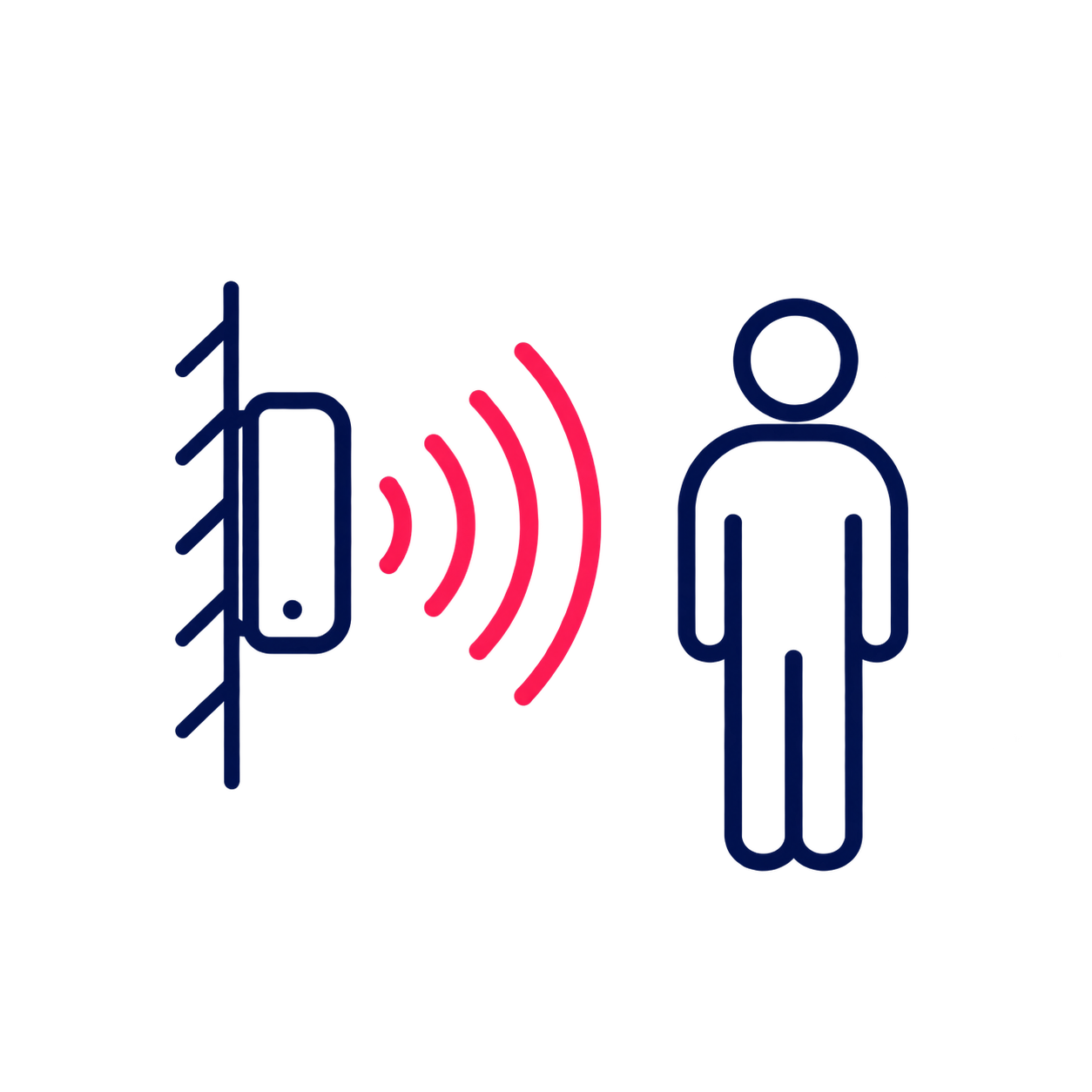
Human localization without ghost target
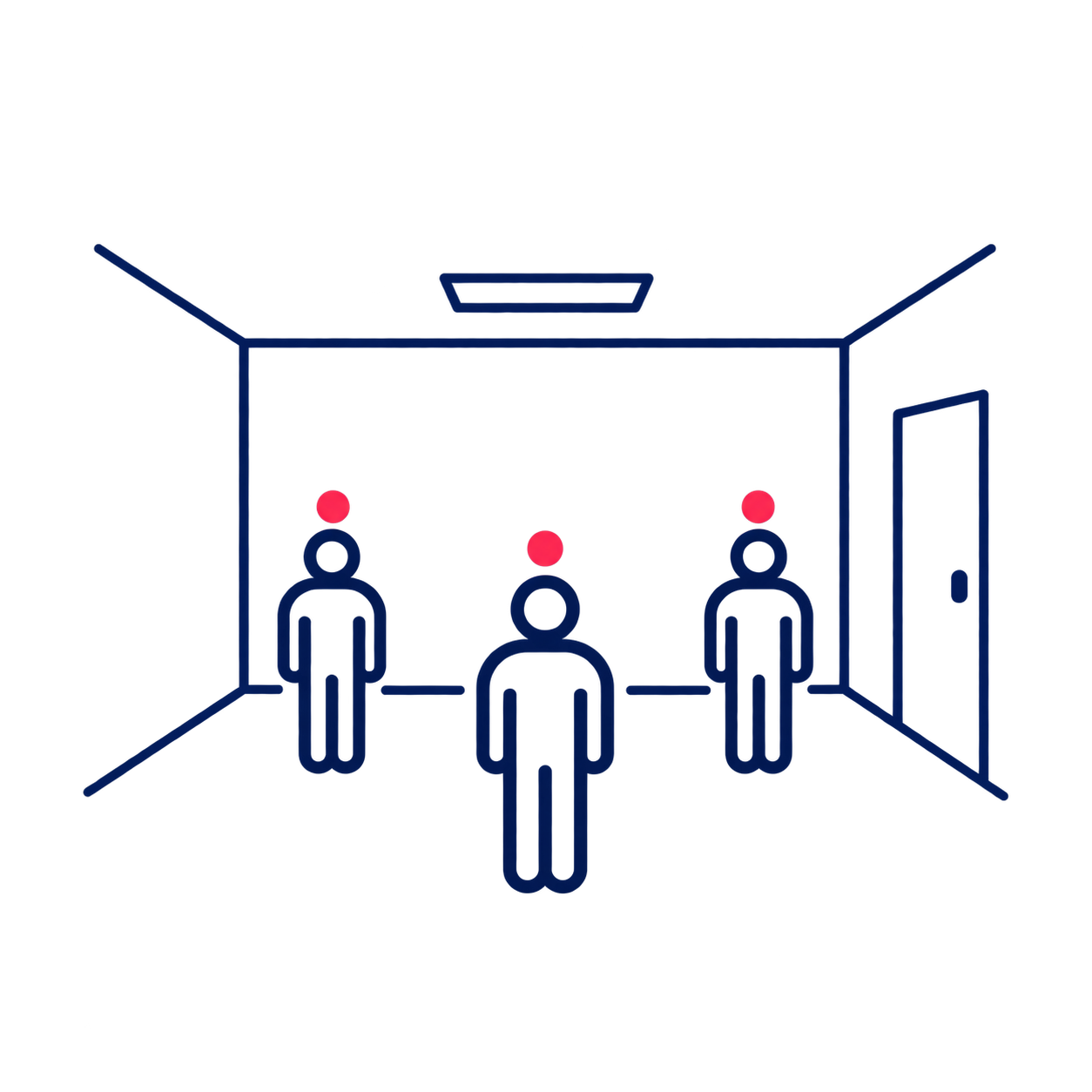
Occupancy and people counting
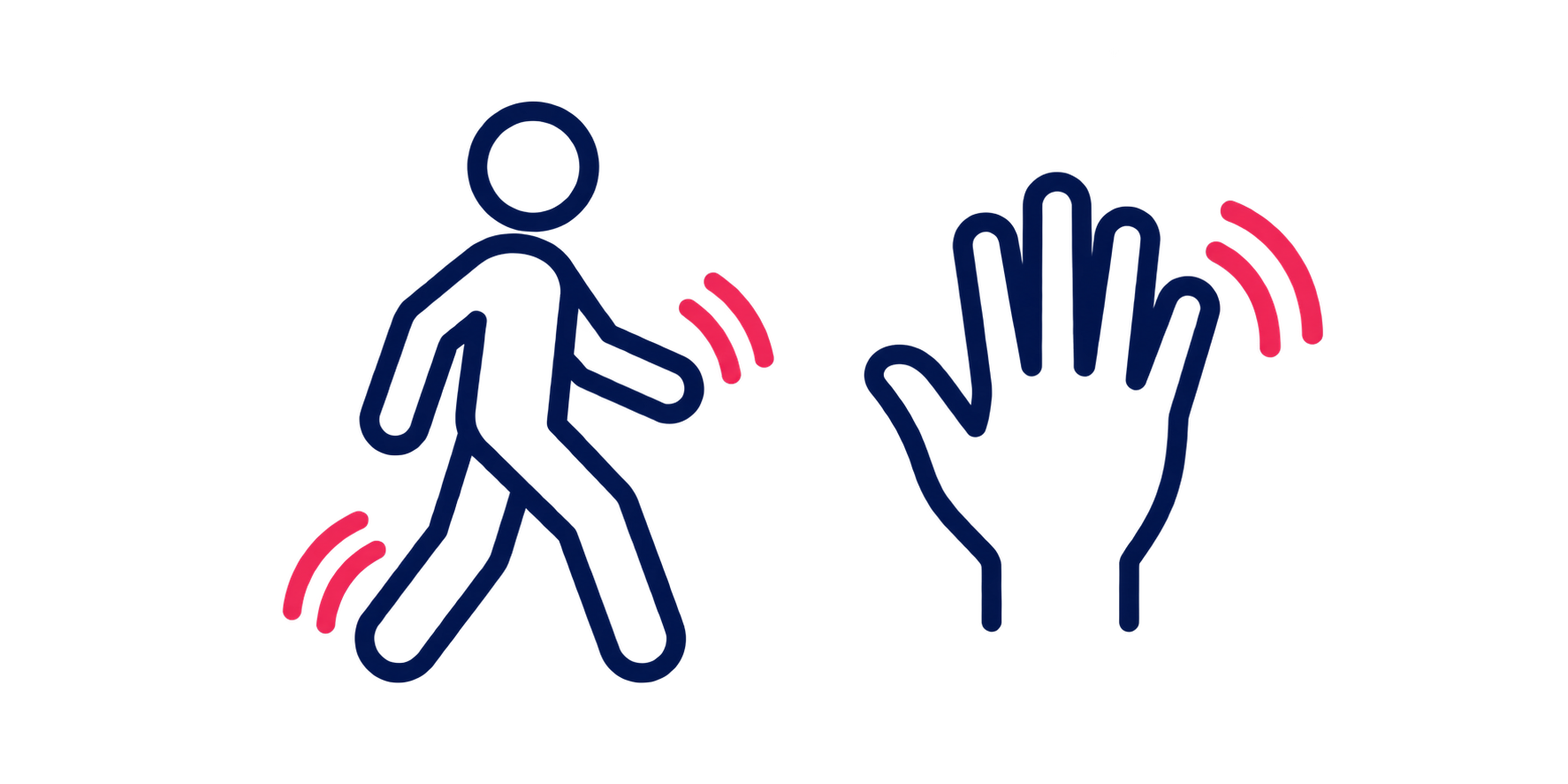
Activity and hand gesture recognition
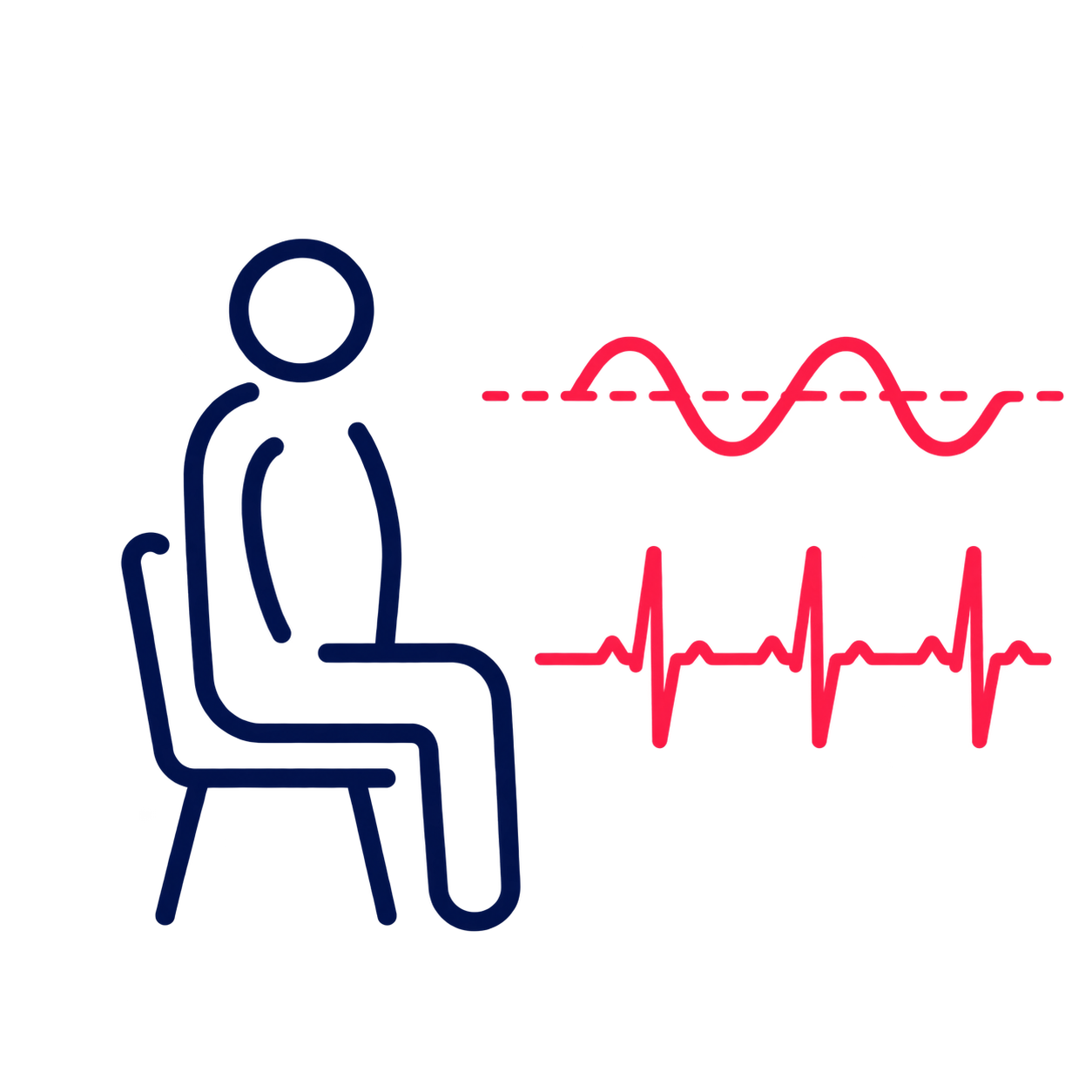
Respiration, heart rate, blink monitoring
Measured results from IRAS Lab experiments at each stage. Select an image to view it at full size. Figures © IEEE.
Radar senses people without cameras. It works in darkness and under occlusion, records no optical imagery, and stays low-cost and privacy-preserving — yet human returns are weak, buried in static clutter, corrupted by indoor multipath, and vary with posture, subject and environment. We work along the whole pipeline to close that gap, starting at the signal: with IR-UWB, MIMO FMCW and CW radars we suppress clutter, extract phase time series of millimeter-scale body motion, and separate direct paths from multipath through DoA/DoD estimation.
On top of these signals we build an understanding of people: localizing them indoors with multipath mitigation, counting occupants and estimating crowd density — evolving from scattering-center extraction through feature-based learning to spatiotemporal transformers that adapt across clutter environments — and recognizing activity and hand gestures from Doppler–angle signatures, down to digits written in the air with a single CW radar.
The same sensing extends to physiology and real spaces. We extract respiration, heart rate and blink duration from phase time series even while the subject moves, strengthen them with video–RF fusion, detect lying-down people through their respiration, and validate counting in real-world crowds. The end metric is reliable, privacy-aware information about people, not image formation itself.
- Human-Centered Sensing
- IR-UWB Radar
- MIMO FMCW Radar
- Multipath Mitigation
- People Counting
- Gesture Recognition
- Vital Sign Monitoring
- Privacy-Aware Sensing
- 04-AIR-UWB, MIMO FMCW & CW radar, clutter suppression & phase extraction
- 04-BIndoor localization, multipath mitigation & people counting
- 04-CHuman activity & hand gesture recognition from Doppler–angle signatures
- 04-DContactless vital sign sensing & video–RF fusion for smart spaces
- 14journal papers
- 22conference papers
- 6funded projects
Selected projects
- 레이다 기반 IoT 기술을 이용한 스마트캠퍼스용 서비스 플랫폼 개발
- 레이다 센서를 기용한 사람 활동에 대한 전파 빅데이터 플랫폼 및 테스트베드 조성
- 재실자 감지 레이다 센서
- 차량용 심박 측정 레이다 센서 신호처리 알고리즘 설계
- 복수 사용자의 재부재 감지 및 재실 밀도 추정 기술
Selected publications
- Multipath Signal Mitigation for Indoor Localization Based on MIMO FMCW Radar System
- Curvature Variance Method for Indoor Human Localization Using MIMO FMCW Radar
- Deep Learning Approach for Radar-Based People Counting
- Mid-Air Hand-Gesture Digit Input Using a CW Radar
- RF-Vital: Radio-Based Contactless Respiration Monitoring for a Moving Individual
- Fusion-Vital: Video-RF Fusion Transformer for Advanced Remote Physiological Measurement
Autonomous Radar & Multimodal Perception
Robust 3D perception for mobility and robotics
Pipeline 01 → 04 end-to-end · multimodal fusionHow can radar overcome limited angular resolution and multipath to detect, localize and map reliably for robots and vehicles?
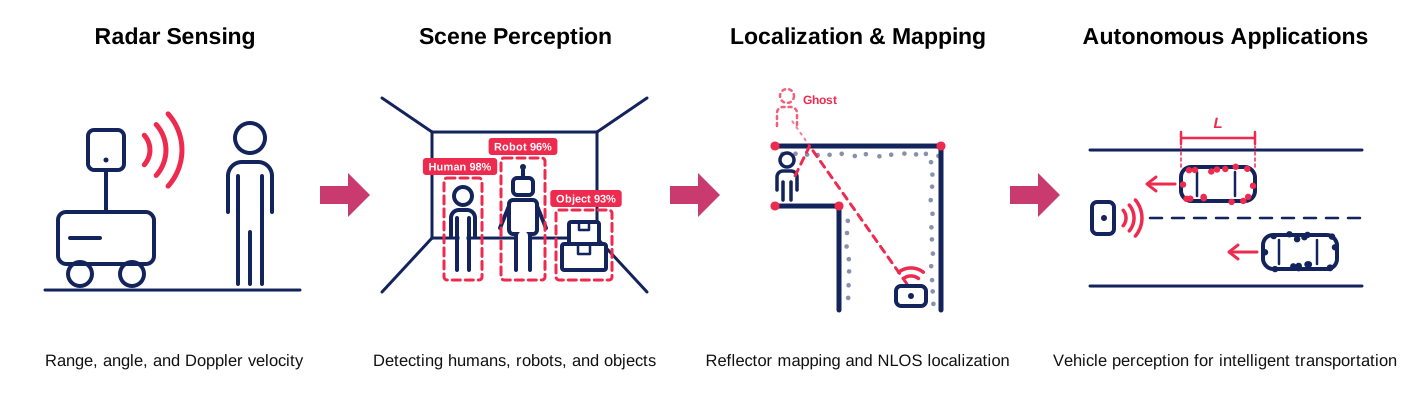
Measured results from IRAS Lab experiments at each stage. Select an image to view it at full size. Figures © IEEE.
Radar directly measures range, azimuth, elevation and radial (Doppler) velocity, works in darkness, dust and smoke, and stays low-cost and privacy-preserving — yet limited angular resolution, sparse point clouds and multipath ghost targets have kept it from becoming a primary sensor for robots. We work along the whole pipeline to close that gap, starting at the sensor: with automotive and MIMO FMCW radars we extend the maximum unambiguous range, improve angular resolution through DoA/DoD estimation, and generate dense 3D point clouds.
On top of these measurements we build scene understanding: detecting and discriminating people, robots and objects under indoor clutter, estimating wall and reflector geometry from scattering-center distributions, and turning multipath from a nuisance into information — localizing non-line-of-sight (NLOS) targets around corners by mirroring their multipath ghost targets across the estimated reflecting surfaces.
The same perception feeds real platforms. We detect vehicles and estimate their heading and length from both stationary and vehicle-mounted radars, and compare and fuse radar with LiDAR and cameras for robotics and autonomous systems. The end metric is reliable perception, localization and tracking, not image formation itself.
- Automotive Radar
- MIMO FMCW Radar
- DoA/DoD Estimation
- 3D Point Cloud
- Multipath Mitigation
- NLOS Localization
- Target Tracking
- Sensor Fusion
- 05-AMIMO FMCW, DoA/DoD estimation & 3D point clouds
- 05-BDetection, classification & tracking in clutter
- 05-CLocalization, mapping & multipath mitigation/exploitation
- 05-DRadar-centric sensor fusion for automotive and robotic platforms
- 4journal papers
- 3conference papers
- 6funded projects
Selected projects
- 자율주행시스템을 위한 3차원 환경인지 융합기술 개발
- 비기계식 LiDAR System Simulation
- 차량용 FMCW 레이다의 실측 데이터 분석 SW 시제품 개발
- 도로 차량 검출용 FMCW 레이다 설계를 위한 시뮬레이터 SW 시제품 제작
- 레이더 기반 각도 분해능 향상 알고리즘 개발
Selected publications
- Double-Conversion FMCW Radar for Extension of Maximum Unambiguous Range
- Radar-Based NLOS Target Localization in Complex Wall Environments Using Structural Variance
- Wall Structure Recognition Based on Scatterer Distribution Using MIMO-FMCW Radar
- Suitability of Various Lidar and Radar Sensors for Application in Robotics: A Measurable Capability Comparison
- Length Prediction of Moving Vehicles Using a Commercial FMCW Radar